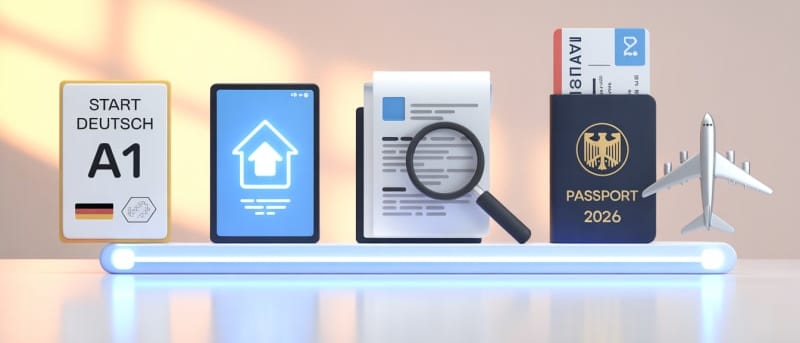
Spouse Visa Processing Time Germany (2026)
TL;DR
From submitting your application to having the visa, plan for about 3–6 months in most cases—sometimes longer depending on the mission and how complete your file is. From first prep to arrival in Germany you’re often looking at 4–7 months total: preparation (1–3 months), submission, processing (2–4 months), decision and issuance (1–2 weeks), then travel.
What this means for you
Start early. If you need an A1 certificate, that alone can take 2–3 months. Get all documents and photos right the first time, submit a complete application via the Consular Services Portal, and reply quickly to any follow-up requests. You can’t speed up the mission’s processing, but a complete application and fast responses help avoid extra delay.
Timeline: Preparation to Arrival
Rough breakdown:
| Stage |
Duration |
What happens |
| 1. Preparation |
1–3 months |
Documents, A1 (if needed), biometric photo, application ready |
| 2. Submission |
1–2 weeks |
Apply via Consular Services Portal, upload docs, pay, book appointment if required |
| 3. Initial review |
1–2 weeks |
Mission checks completeness; may ask for missing documents |
| 4. Processing |
2–4 months |
Background checks, verification, decision |
| 5. Decision & issuance |
1–2 weeks |
Notification, visa in passport, collection |
| 6. Travel |
Varies |
Enter Germany within visa validity, Anmeldung, then residence permit |
Total (typical): about 3–6 months from submission to visa; 4–7 months from start of prep to arrival.
Stage 1: Preparation (1–3 Months)
Use this time to get everything in order. If you need A1, plan for 2–3 months from signing up for the test to having the certificate (A1 for Spouse Visas (2026)). Check whether you’re exempt (Spouse Visa Exemptions (2026)). Gather passport, marriage certificate, proof of relationship, finances, accommodation, and get a biometric photo that meets current rules. Allow 2–4 weeks to collect documents, 1–2 weeks to review and finalise the application. Start early and get translations done in good time if needed.
Stage 2: Submission (1–2 Weeks)
Create an account on the Consular Services Portal, start the spouse visa application, upload all required documents (A1 if applicable, photo, marriage certificate, financial and accommodation proof, etc.), complete the forms, pay the fee, and submit. If the mission requires an appointment, book it—availability can add 1–2 weeks. Make sure uploads meet the portal’s format and size rules (Berlin LEA language certificate rules (2026) apply to language docs). Double-check everything, keep copies, and save your application reference number.
Stage 3: Initial Review (1–2 Weeks)
The mission checks that the application is complete. If something is missing, they’ll ask—reply quickly so you don’t add delay. You may get a request for more documents or an interview. Status updates often appear in the portal.
Stage 4: Processing (2–4 Months)
This is when the mission does background checks, verifies documents and relationship, and decides. You may hear little in this phase; that’s normal. They may contact you for more information or an interview. How long it takes depends on workload, complexity, and how complete your file was. Busy missions and peak times can mean longer waits.
Stage 5: Decision and Issuance (1–2 Weeks)
You’re notified of the decision. If approved, the visa is put in your passport and you collect it (or it’s returned by the mission’s usual method). Then you can plan travel. Enter before the visa’s validity ends (often 3–6 months). If the application is refused, the notice will explain why; you may be able to appeal or reapply after addressing the issues—a lawyer can help.
Stage 6: After the Visa – Travel and Registration
Book your trip and enter Germany within the visa validity period. Register at the local registration office (Anmeldung) within two weeks of arrival. Apply for your residence permit at the immigration office before your visa expires (usually within three months). Keep all documents safe.
What Affects How Long It Takes
Complete applications tend to move faster; missing documents mean requests and extra weeks. Mission workload and peak seasons can lengthen processing. Country of origin and individual circumstances sometimes mean more checks. Starting preparation early and submitting a full, correct application is the best way to avoid avoidable delay.
Tracking Your Application
Log into the Consular Services Portal to see status and any messages. Check your email (and spam) and respond quickly to any request. Contact the embassy or consulate only when necessary; asking too often won’t speed things up.
How to Avoid Delays
Prepare everything in advance, submit a complete application, and reply promptly to any follow-up. Have documents translated early, get A1 in good time if required, and make sure uploads meet the portal’s requirements. Keep copies and note important dates.
Frequently Asked Questions
How long does a spouse visa take?
Often 3–6 months from submission to visa; with preparation and travel, 4–7 months to arrival in Germany. Times vary by mission and case.
What’s the fastest way?
Submit a complete application as early as you can: all documents, correct format, no missing pieces. Respond quickly to any request. You can’t control the mission’s workload, but you can avoid hold-ups on your side.
Can I speed up processing?
You can’t shorten the mission’s internal processing. You can reduce delay by preparing well, submitting a full application, and replying fast to any request.
What if it takes longer than 2–4 months?
Processing can stretch because of workload, complexity, or extra checks. Check the portal and your email; if you’re past the mission’s usual timeframe, you can contact them once to ask. Otherwise, wait—repeated inquiries don’t help.
How do I track status?
Via the Consular Services Portal: log in and check your application. You may also get email updates.
What to do while I wait?
Keep learning German, look into accommodation, read up on Anmeldung and the residence permit, and plan travel. Use the time to prepare for the move.
Official Sources
Last checked: February 2026. Processing times are set by each mission and can change; confirm current timelines with your embassy or consulate.
Next Steps
Start preparation early. Gather documents, get A1 if required (or confirm exemption), get a compliant biometric photo, and review the Consular Services Portal requirements. Submit a complete application, track it in the portal, and respond quickly to any request. Once the visa is issued, enter Germany within its validity and do Anmeldung and the residence permit in time.
More: A1 for Spouse Visas (2026), Spouse Visa Exemptions (2026), Biometric Photos (2026), Berlin LEA Stricter Mandate (2026).