German Etiquette 101: Politeness, Professionalism, and Everyday Manners
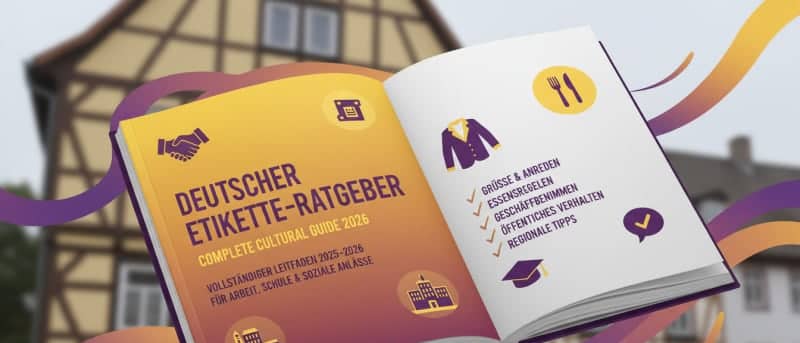
Germany values respect, structure, and clear communication. Mastering etiquette helps you make good impressions, avoid awkward moments, and feel at home in workplaces, schools, and social gatherings. This guide provides practical advice, cultural context, and ready-to-use checklists.
What you will learn:
- How to greet people formally and casually across contexts.
- Dining, drinking, and hosting etiquette from casual dinners to business banquets.
- Professional norms in meetings, emails, presentations, and networking.
- School and university expectations for students and teachers.
- Public behaviour—transport, queues, recycling, and noise rules.
- Gift-giving customs, celebration etiquette, and regional differences.
- Checklists, dialogues, and a 14-day immersion plan to practise.
Table of Contents
- 1. Cultural Pillars of German Etiquette
- 2. Greetings & Small Talk
- 3. Titles, Formalities, and Du vs. Sie
- 4. Dining & Drinking Etiquette
- 5. At Work: Meetings, Emails, and Networking
- 6. School & University Manners
- 7. Public Etiquette (Transport, Shopping, Neighbours)
- 8. Gift-Giving & Special Occasions
- 9. Regional & Cultural Variations
- 10. Practical Dialogues & Roleplays
- 11. Checklists & Quick Reference
- 12. 14-Day Etiquette Immersion Plan
- 13. FAQs and Further Resources
1. Cultural Pillars of German Etiquette
- Punctuality: Being on time (or 5 minutes early) shows respect.
- Directness: Honest communication is valued; politeness does not mean vagueness.
- Privacy: Personal questions are asked once trust is built.
- Structure: Rules, procedures, and written confirmations matter.
2. Greetings & Small Talk
Formal Settings
- Shake hands firmly while making eye contact.
- Use titles: Herr, Frau, Dr., Professor.
- Greetings: “Guten Tag”, “Guten Morgen”, “Guten Abend”.
- Small talk topics: weather, travel, professional background, weekend plans.
Casual Settings
- “Hallo”, “Hi”, regional greetings (“Moin”, “Servus”).
- Hugs reserved for close friends; a friendly nod or handshake suffices otherwise.
Leaving
- Say “Auf Wiedersehen” or “Tschüss” depending on formality.
- In office settings, greet/say goodbye to the whole room (“Mahlzeit” at midday, “Schönen Feierabend”).
3. Titles, Formalities, and Du vs. Sie
Use Sie until someone invites you to use du. The person with higher rank or age initiates the switch. When switching, clink glasses or shake hands to seal it.
Email etiquette: Start with “Sehr geehrte/r” for formal emails, “Hallo/ Guten Tag + Name” for semi-formal, and “Hi” for casual colleagues. Sign off with “Mit freundlichen Grüßen” or “Viele Grüße”.
4. Dining & Drinking Etiquette
Before Dining
- Wait for the host to say “Guten Appetit” or “Mahlzeit” before eating.
- Keep hands visible (wrists on table, not elbows).
- Use cutlery from outside in.
Toasting
- Raise glass, maintain eye contact, say “Prost!” (beer) or “Zum Wohl!” (wine).
- Clink gently. Never cross arms while toasting.
Restaurant Tips
- Say “Entschuldigung” to get the waiter’s attention.
- Tip 5–10% for good service by rounding up when paying (“Machen Sie 25 Euro”).
- Splitting bills is common; specify “Getrennt” when the bill arrives.
5. At Work: Meetings, Emails, and Networking
Meetings
- Arrive on time, prepared with agenda notes.
- Begin with a brief greeting, handshake if meeting in person.
- Use formal address until invited to switch to first names.
- Respect turn-taking; interrupting is frowned upon.
Presentations
- Structure your talk: introduction, main points, summary.
- Provide handouts or slides in advance if possible.
- Invite questions at the end (“Gibt es Fragen?”).
Networking & Office Etiquette
- Use polite email greetings; confirm meetings via email or calendar invitations.
- Bring pastries (“Kuchen bringen”) to celebrate birthdays or milestones.
- Respect quiet hours in open offices; use meeting rooms for calls.
6. School & University Manners
- Students often address teachers with “Herr/Frau [Surname]”.
- Punctuality for lectures and appointments is crucial.
- Participate actively but wait your turn; raise hand or use chat function online.
- Plagiarism is taken seriously—cite sources properly.
- During group work, share tasks fairly and agree on deadlines.
7. Public Etiquette
Transport
- Stay quiet on trains/buses; phone calls kept brief and soft.
- Offer seats to elderly, pregnant, or disabled passengers.
- Validate tickets before boarding where required.
- Queue orderly; do not push into trains until others exit.
Public Spaces
- No jaywalking—wait for the Ampelmann (green light).
- Observe Sunday quiet hours (Ruhetag); avoid loud work or parties.
- Recycle: separate paper, plastic, glass, bio waste; return bottles for Pfand.
Shopping
- Bring reusable bags; pack groceries yourself at checkout.
- Greet staff upon entering (“Guten Tag”) and thank them when leaving.
- Cash is still common, but card use is increasing—check signage.
8. Gift-Giving & Special Occasions
- Birthdays: Congratulate on the day, never early (superstition). Bring flowers (odd number), wine, or sweets.
- Housewarming: Bread and salt are traditional symbols for prosperity.
- Business gifts: Small branded items or local products. Avoid overly expensive gifts.
- Christmas markets: Exchange small gifts; sending cards to colleagues is appreciated.
9. Regional & Cultural Variations
- North Germany: Direct but polite. “Moin” works morning to night.
- West (Rhine/Ruhr): Warm small talk, especially during Carnival (“Alaaf!” “Helau!”).
- South (Bavaria, Swabia): Traditional greetings (“Servus”, “Grüß Gott”), strong community events.
- East (Berlin, Saxony): Informal, sarcastic humour; expect Berliner Schnauze.
10. Practical Dialogues & Roleplays
Scenario 1: Meeting a new colleague
Du: “Guten Morgen, Frau Müller. Freut mich, Sie kennenzulernen.”
Sie: “Hallo, Herr Hartmann. Willkommen im Team.”
Scenario 2: Toast at a dinner
Gastgeber: “Ich freue mich, dass Sie da sind. Zum Wohl!”
Gäste: “Zum Wohl!” (eye contact, clink glasses)
Scenario 3: Asking for “du” switch
“Wir arbeiten jetzt schon eine Weile zusammen. Wollen wir uns duzen?” If accepted: clink glasses or shake hands, say “Auf das Du!”
11. Checklists & Quick Reference
Greeting Checklist
- [ ] Eye contact
- [ ] Handshake (when appropriate)
- [ ] Correct greeting (“Guten Tag” vs “Hallo”)
- [ ] Use title + surname
- [ ] Ask neutral question (“Wie war Ihr Wochenende?”)
Meeting Checklist
- [ ] Arrive on time
- [ ] Agenda prepared
- [ ] Notes ready
- [ ] Phone on silent
- [ ] Follow-up email sent afterwards
12. 14-Day Etiquette Immersion Plan
Spend 15–20 minutes a day building habits:
- Day 1: Practise greetings with mirror (roleplay formal + informal).
- Day 2: Watch a German etiquette video (DW Euromaxx) and note tips.
- Day 3: Learn titles and practice writing a formal email greeting/closing.
- Day 4: Plan a mock dinner—set table, practise toasts.
- Day 5: Study business etiquette—watch meeting etiquette tutorial.
- Day 6: Learn recycling categories; observe local rules.
- Day 7: Explore regional greetings; practise saying “Moin”, “Servus”, etc.
- Day 8: Visit a café; follow ordering etiquette in German.
- Day 9: Practise giving/receiving compliments politely.
- Day 10: Roleplay a networking conversation with a partner.
- Day 11: Learn three polite refusal phrases (“Vielen Dank, aber ich habe schon Pläne…”).
- Day 12: Read an article about German business culture (IHK, Goethe Institut).
- Day 13: Send a gratitude note or message to a colleague/friend.
- Day 14: Review progress, set ongoing etiquette reminders.
13. FAQs and Further Resources
What if I forget a rule?
Apologise briefly (“Entschuldigung, ich lerne noch.”) and move on. Effort is appreciated.
Are Germans really strict about punctuality?
Yes—arriving late without warning is considered rude. If delayed, contact the person immediately.
How formal should I be?
Start formal, adapt to cues. Observe how others address each other and follow suit.
Can I hug colleagues?
Only if you know them well and they initiate. Otherwise, stick to handshake or friendly wave.
Where can I learn more?
- Goethe-Institut culture guides
- “How to Germany” website
- “German Customs and Traditions” (book)
Conclusion: Etiquette Builds Trust
German etiquette is all about mutual respect. Master these routines and you'll build stronger relationships, avoid cultural faux pas, and feel at ease in any situation.
Next step: Pick one checklist today (greetings, dining, or meetings) and practise it in a real interaction. Review your experience and adjust. Every polite gesture counts.
Official sources & references
Authoritative culture and business sources cited in this guide. All links verified.