The New "Work and Stay Agency" Launch: Unified Digital Platform for German Visa Processing and Degree Recognition (2026)
On 5 November 2025, the German federal cabinet agreed on the core design for the "Work and Stay Agency" (Work-and-Stay-Agentur, WSA)—a digital platform to streamline skilled worker immigration. It is not a new authority: it will tie together existing digital systems (visa, recognition, labour market approval, registration) so applicants can complete more steps in one place. Central IT components are due to be tendered in 2026, with a detailed timeline and cost plan expected by 1 March 2026. Rollout will be gradual over the next years.
What this means for you
The Work and Stay Agency is not yet live. For now you still apply via the existing Consular Services Portal (Auslandsportal) for visas and use the usual recognition and labour-market procedures. When the WSA launches, the aim is one digital entry point for applications, document uploads, and status tracking—with fewer separate visits and less paper. Until then, rely on official portals (digital.diplo.de, Make it in Germany, your local Ausländerbehörde) and watch federal and state announcements for when the new platform becomes available in your case type.
What Is the Work and Stay Agency?
The federal government describes the WSA as a digital platform that connects existing infrastructures rather than creating a new agency. The Federal Office for Foreign Affairs (Bundesamt für Auswärtige Angelegenheiten, BfAA) and the Federal Employment Agency (Bundesagentur für Arbeit, BA) are central. Today, a large share of skilled-worker visa procedures is already processed by the BfAA in Brandenburg an der Havel; the plan is to expand that role and link it to a single digital front end. Degree recognition stays with the Länder and chambers, but the WSA is intended to integrate those steps into one process.
Goals are to simplify and speed up procedures, improve transparency (e.g. status tracking), and coordinate visa offices, labour market approval, immigration authorities, and recognition bodies in one digital flow. Procedure-supporting use of AI is planned to help speed up processing.
Planned Services (When the Platform Is Live)
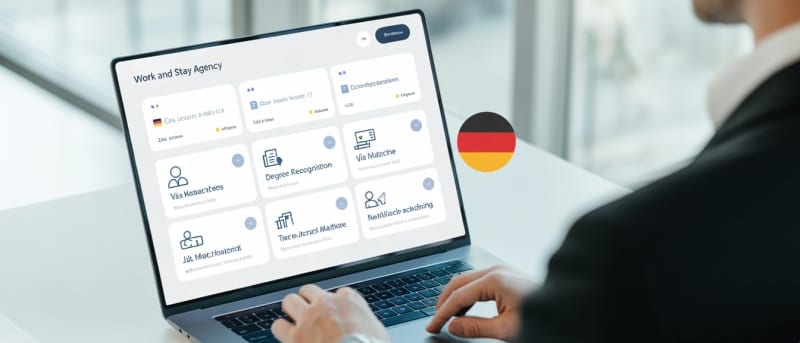
Unified visa and residence: One portal for applications for work visas, residence permits, Blue Card, and family reunification, with digital document upload and verification, and status tracking.
Degree recognition: Recognition remains a Länder/chamber competence; the WSA will connect to these procedures so applicants can start recognition and visa steps from one place and see progress in one view.
Labour market and jobs: Connection to BA systems for labour market checks and job-matching support, so that approvals and job search can be aligned with the visa process.
Integration and support: Central access to information on integration and language courses, with the aim of making it easier to find and fulfil integration requirements.
Document management: Secure, centralised submission and reuse of documents across procedures so you do not have to submit the same papers repeatedly.
Exactly which services go live first, and when, will depend on the March 2026 plan and the outcome of the IT tenders. The cabinet paper stresses gradual implementation.
What Will Be Connected
The WSA is to build on and link existing systems. These include the Auslandsportal (Federal Foreign Office consular/visa portal), the Serviceportal Migration Deutschland (BMI’s central migration information platform), the electronic labour market approval procedure (AMZ) of the BA, and the Register Portal of the Federal Administrative Office. So the aim is a single user journey that uses today’s portals in the background rather than replacing them overnight.
How You Apply Today (Until the WSA Is Available)
Until the Work and Stay Agency is rolled out, use the current official channels:
National visas (from abroad): Apply via the Consular Services Portal (digital.diplo.de). Complete the digital application, upload documents, then attend the in-person appointment at the mission for biometrics and to hand in originals.
Residence permits (in Germany): Your local immigration office (Ausländerbehörde) is responsible. Procedures and online options differ by city; check your city’s or district’s website.
Degree recognition: Apply to the competent body in your Land (e.g. ministry, chamber, or ZAB for some qualifications). The Anabin database is used to check foreign higher education institutions; recognition remains with the designated authority.
Information and checklists: Make it in Germany (federal government portal) explains visa types, requirements, and procedures in English and other languages.
When the WSA launches, the federal government will announce how and where to access it; for the moment there is no separate “Work and Stay Agency” website to use for applications.
Timeline and Rollout
November 2025: Cabinet adopted the core design (Eckpunkte) for the Work and Stay Agency.
2026: Tender for central IT components; development and integration work begins.
1 March 2026: A detailed timeline and cost plan for the WSA is expected.
2026–2027 and beyond: Phased implementation. Which services go live first (e.g. visa, recognition, job matching) will be defined in the implementation plan. Full nationwide rollout will take time.
So far, the government has not published a precise date when applicants can use the new platform. Watch official federal and Land pages and Make it in Germany for updates.
Benefits the Government Aims For
The stated aims are faster processing through digitalisation and automation, fewer in-person steps and less paper, clearer status information for applicants, and better coordination between BfAA, BA, immigration offices, and recognition bodies. If the WSA is delivered as planned, applicants could in future submit documents once and see progress in one place. Multi-language support and a user-friendly interface are goals, but details depend on the final design and tenders.
Use Cases (When the Platform Exists)
Skilled worker (e.g. Section 19c IT): In future, an IT professional could create one account, enter qualifications and job offer, trigger recognition checks where needed, submit the visa application and documents digitally, and track status in one place—with a single biometric/original-document appointment at the mission. Today you still do this via the Consular Portal and the relevant recognition and labour-market procedures.
Recognition first, then visa: A doctor or nurse could start recognition via the WSA front end; the system would connect to the competent Land body and Anabin where relevant, then link the outcome to the visa or residence application. Recognition itself stays with the existing authorities.
Family reunification: The aim is for the family member in Germany and the relative abroad to use one linked process with shared status tracking. Until the WSA is live, family reunification continues via the Consular Portal and the responsible immigration office.
Time savings (e.g. “weeks faster”) are expectations, not guarantees; actual gains will depend on implementation and your individual case.
Security and Data Protection
The cabinet decision and ministry statements emphasise secure, encrypted handling of data and compliance with data protection law (including GDPR). Two-factor authentication, encrypted transmission, and strict access rules are planned. Concrete technical and privacy details will be set in the implementation and tender documents.
What Is Not Changing (For Now)
Degree recognition remains with the Länder and designated bodies (chambers, ZAB, etc.); the WSA does not replace them but is to connect to them. Visa decisions and residence permits remain with the Federal Foreign Office and the local Ausländerbehörden. The BA keeps its role in labour market approval. The WSA is meant to be the digital “front door” that routes your case through these existing actors.
Where to Get Official Information
Use only government and official sources for current status and next steps:
Last checked: February 2026.
Next Steps
If you are applying in 2026, use the existing Consular Services Portal and your local immigration office; the Work and Stay Agency is not yet the application channel. Keep an eye on federal and Land announcements and Make it in Germany for when the new platform goes live for your visa or recognition path. For current requirements and procedures, see our guides on Section 19c salary threshold, digital passport photos, and B1 and permanent residency.