Multimodal Learning: Why 2026 German Students are Swapping Textbooks for Video-Interactive Hubs
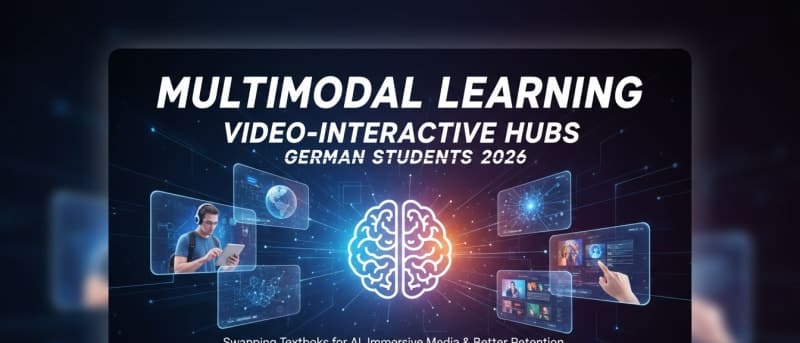
Breaking News: As of Q2 2026, the German educational landscape has reached a tipping point. Educational experts report that multimodal literacy has moved to the center stage of language instruction. In a post-textbook era, 2026 students are no longer just "reading" German; they are interpreting and creating meaning across integrated streams of text, audio, and video-interactive hubs.
News Hook: Multimodal Becomes the Standard
The traditional "grammar-first" textbook approach is being replaced by blended online-offline learning models. This shift is driven by a move away from one-size-fits-all programs toward skill-based, personalized development powered by AI and immersive media. Classrooms are transforming into "Connected Classrooms" where high-end AV technology and software orchestration replace static paper resources.
The Shift: From Textbooks to Interactive Media
2026 marks a fundamental transformation in how German is taught and learned:
- Personalized Learning: AI-powered systems adapt content to individual proficiency levels in real-time
- Immersive Experiences: VR tours, interactive videos, and digital simulations replace static text
- Skill-Based Approach: Focus shifts from rote memorization to practical communication skills
- Connected Classrooms: High-end AV technology enables seamless integration of multiple media types
This shift is backed by significant performance data showing improved retention and engagement compared to traditional textbook methods.
What is Multimodal Learning: Text, Video, Audio Combined
Multimodal learning in 2026 is an instructional approach that engages multiple sensory channels simultaneously:
Visual
Interactive videos, infographics, and 360° VR tours provide immersive visual experiences. Students can explore German cities, cultural sites, and real-world scenarios without leaving the classroom.
Auditory
Podcasts and AI-generated speech with various regional accents expose learners to authentic pronunciation and dialect variations. This helps develop listening comprehension and cultural understanding.
Textual
Levelled digital texts that adapt to a student's proficiency band in real-time. Content automatically adjusts difficulty based on performance, ensuring optimal challenge levels.
Kinesthetic
Digital simulations and role-playing tasks that mimic real-world German scenarios like business meetings or navigating a city. These interactive experiences build practical communication skills.
Key Benefits: Better Retention and Engagement
The transition to multimodal German learning in 2026 is backed by significant performance data:
Memory Retention
Students engaging with multiple sensory inputs show improved recall. For example, reading aloud while scanning visually has been shown to increase word retention from 65% to 77%—a significant improvement over single-modality learning.
Emotional Engagement
Multimodal corrective feedback—using video or gestures rather than just red ink—fosters a positive emotional environment, reducing the anxiety often associated with language errors. This creates a more supportive learning atmosphere.
Efficiency
Task-Technology Fit (T-TF) ensures that when technology effectively supports the task, students accomplish more in less time with higher accuracy. Personalized learning paths optimize study time and outcomes.
Real-World Application
Multimodal learning bridges the gap between classroom theory and practical application, preparing students for actual communication in German-speaking environments.
Platforms Leading the Way
Several tools are leading the multimodal revolution in Germany:
European Digital Education Hub
A consortium-led platform (including the DAAD) that facilitates cross-sectoral collaboration on the future classroom and AI in education. It connects educators, institutions, and technology providers across Europe.
Interactive Learning Management Systems (LMS)
Platforms like LearnWorlds and WorkRamp allow educators to convert standard videos into interactive experiences with automatic transcripts and quizzes. These systems transform passive viewing into active learning.
AI Co-Teachers
Tools that use Generative AI to draft lesson variants and offer immediate feedback on speaking and writing. These AI assistants provide personalized guidance 24/7, adapting to each student's needs.
University Programs
Institutions like the University of Europe for Applied Sciences emphasize intensive, real-world communication skills over rote memorization, integrating multimodal approaches into their curriculum.
What's Next: Future of Multimodal Education
Looking beyond 2026, the integration of Multimodal Large Language Models (MLLMs) will further personalize the experience, acting as tireless 1-on-1 tutors that can generate human-like text, images, and sounds.
Upcoming Innovations:
- Agentic AI: Digital agents that assist students in real-world communicative tasks, further bridging the gap between classroom theory and practical application
- Advanced Personalization: AI systems that adapt not just to proficiency level, but to learning style, interests, and goals
- Immersive VR Classrooms: Fully virtual environments where students interact with native speakers and cultural contexts
- Real-Time Collaboration: Enhanced tools for virtual exchanges and community interview projects
Quick Start: How to Begin Multimodal Learning
To begin multimodal German learning in 2026:
- Adopt "Anytime, Anywhere" Tools: Use apps that combine text, audio, and visual challenges to build daily consistency. Look for platforms that offer multiple learning modalities in one interface.
- Utilize Authentic Media: Swap traditional drills for authentic German resources like the TV series Rosenheim-Cops or news podcasts to see how language works in context.
- Engage in Virtual Exchange: Participate in local community interview projects or virtual exchanges to practice speaking in "unfamiliar settings" with real native speakers.
- Enroll in Modern Courses: Look for programs at institutions like the University of Europe for Applied Sciences that emphasize intensive, real-world communication skills over rote memorization.
- Combine Modalities: Don't rely on just one type of media—mix videos, podcasts, interactive exercises, and real-world practice for maximum effectiveness.
Pro Tips:
- Start with authentic media that matches your interests (TV shows, podcasts, YouTube channels)
- Use interactive platforms that provide immediate feedback
- Practice speaking through virtual exchanges or language exchange apps
- Track your progress across different modalities to identify what works best for you
- Take advantage of AI co-teachers for personalized guidance and instant feedback